


Process is the drug of choice for modern businesses.
It feels so good at first. Order. Clarity. Predictability.
Suddenly there's structure where chaos lived. Frameworks replacing guesswork. A system everyone can follow.
That first hit is magical.
But like any addiction, tolerance builds fast.
Soon you need more process to feel the same control. More meetings to feel productive. More approvals to feel safe. More spreadsheets tracking spreadsheets to feel like you understand what’s happening.
What started as a supplement becomes poison.
I saw this play out in real time at a hackathon.
Our competitors showed up with elaborate Excel model. Ten columns for each idea. Effort scores. Impact ratings. Risk assessments. Beautiful graphs plotting assumptions against other assumptions. They'd spent half the time creating a process to evaluate ideas they'd never actually tested with real humans.
Our team? We just talked to users.
We built something they desperately wanted. We solved real problems they were actually experiencing. And we won.
Not because we were smarter. Because we stayed close to reality while everyone else got lost in their frameworks.
That's when it clicked for me.
Process is the ultimate distraction.
It creates artificial distance between you and the problems you're trying to solve.
It numbs you to reality.
When Process Becomes Paralysis
First you implement process to scale solutions.
Then you implement more process to manage the first process.
Then you hire people whose entire job is maintaining the process.
Suddenly you're three layers removed from the actual work. From the actual users. From the actual insights that matter.
Every framework becomes another layer of insulation from messy, uncomfortable reality.
This is happening at the worst possible moment.
AI is rewriting entire industries overnight. I canceled $70 worth of recurring subscriptions and rebuilt all those products using Claude in a weekend.
The market isn't shifting yearly anymore. It's shifting weekly.
The companies that need to move fastest are the ones most numbed by their process dependency. They're trying to navigate a revolution with frameworks designed for stability.
The process that once saved them is now killing them.
Rituals Masquerading as Safeguards
You see it everywhere.
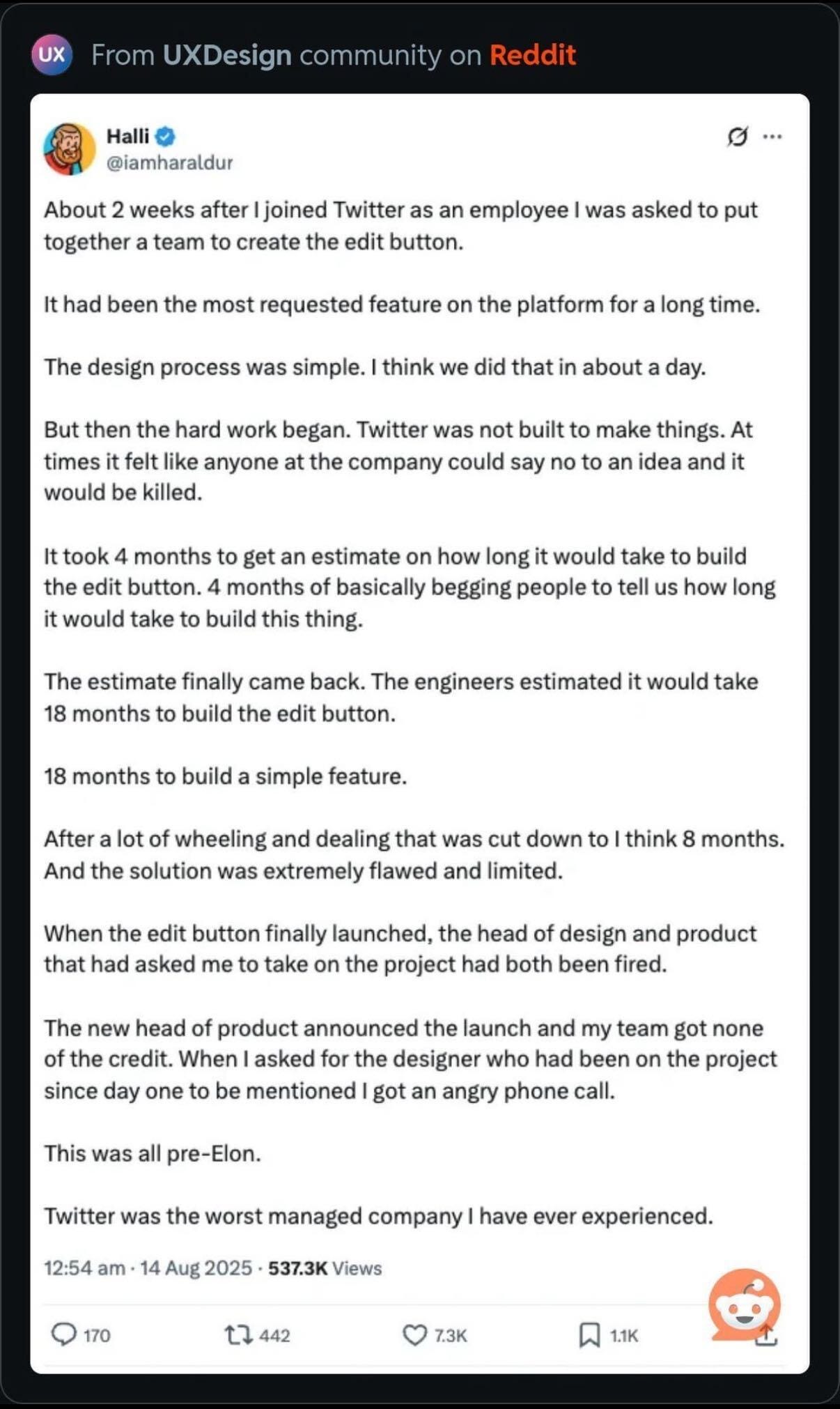
Six approval cycles for decisions that needed to be made yesterday. Two-week review cycles for one-day problems. Strategy documents that take longer to write than become irrelevant.
These aren't safeguards anymore. They're rituals.
Religious ceremonies that make us feel in control while the world races ahead.
Process promises consistency. But consistency of what?
Consistent mediocrity?
Consistent slowness?
Consistent distance from what matters?
True consistency doesn't come from rigid frameworks. It comes from principles and judgment that you've internalized so deeply they become instinct.
Master Process, Then Transcend It
The answer isn't eliminating process entirely. That's just swinging to the opposite extreme.
It's breaking the addiction.
Learning when to abandon the framework and go straight to the source.
When to skip the meeting and talk directly to the customer.
When to ignore the roadmap and build the thing that solves the actual problem people are having right now.
Think about how a jazz musician approaches improvisation. They've practiced scales and theory religiously for years. But in the moment of performance, they're not consciously following the rules, they've transcended them.
Technical foundation becomes invisible. What emerges is pure responsiveness to what the music needs in that moment.
Process works the same way.
In the beginning, you follow it religiously to build baseline understanding.
You internalize its principles. You make it part of your operating system. But true mastery comes when you know when to leave it behind. When you can feel the moment that calls for breaking the rules.
If you're constantly falling back on rigid adherence to process, you'll never achieve this freedom.
Part of mastery is knowing when the process has served its purpose.
Most breakthrough results come from strategic withdrawal.
From getting uncomfortably close to messy, unfiltered reality.
From touching the problem directly instead of reading about it in a slide deck.
The companies that win in the AI era won't be the ones with the best processes.
They'll be the ones who know when to throw the process away.
Who maintain their ability to see clearly through the chaos.
Who stay close enough to reality to feel what's actually happening, not what their dashboards say is happening.
Process should be a tool, not a crutch.
A map, not a cage.
The question that haunts me now: How many insights am I missing because I've insulated myself from the discomfort of not knowing?
Process numbs.
Proximity illuminates.
And in a world changing this fast, the companies that stay numb are the ones that disappear.