


I’ve become obsessed with friction lately.
Not the physics kind. The human kind.
The resistance we feel when facing something difficult. The pressure that makes us reach for the "easy button."
And I've noticed something disturbing: We're building a world that worships velocity above all else.
Speed. Ease. Frictionless experience.
We want machines to summarize everything, solve everything, accelerate everything.
Remove the resistance. Flatten the path. Get there faster.
This feels like progress.
It's not.
It's a trap that I've fallen into myself.
This obsession with the path of least resistance is creating a generation of shallow, replaceable humans who shatter at the first real challenge.
People who can't think when the prompt fails.
People who can't build when the tutorial ends.
People who can't persist when the difficulty spikes.
I see it in myself sometimes. The temptation to let AI think for me. To skip the hard parts. To optimize for convenience over growth.
But here's the brutal truth I've had to confront:
When everyone defaults to the easy path, they build exactly the skills AI will automate first.
Difficulty as Design, Not Bug
What if we've got this whole resistance thing backwards?
I used to see friction as the enemy. The thing to eliminate. The barrier between me and progress. But I've started to notice something fascinating about how value gets created in any field:
The programs that produce the most valuable people aren't trying to make things easier.
Medical schools don't streamline becoming a doctor. They make it brutal.
Ivy League institutions don't optimize for student comfort. They filter through difficulty.
Elite programs in any domain aren't trying to maximize graduation rates. They're testing who can endure.
The difficulty isn't a bug. It's the feature.
The resistance isn't just a filter. It's the forge.
I love this metaphor from Immanuel Kant about a dove flying through the air.
The dove thinking to itself, "You know what would make this easier? No air resistance. I'd fly so much better in a vacuum."
But that resistance the dove is fighting against? It's what makes flight possible in the first place.
Without that friction, that push-back from the air, the dove would drop like a stone.
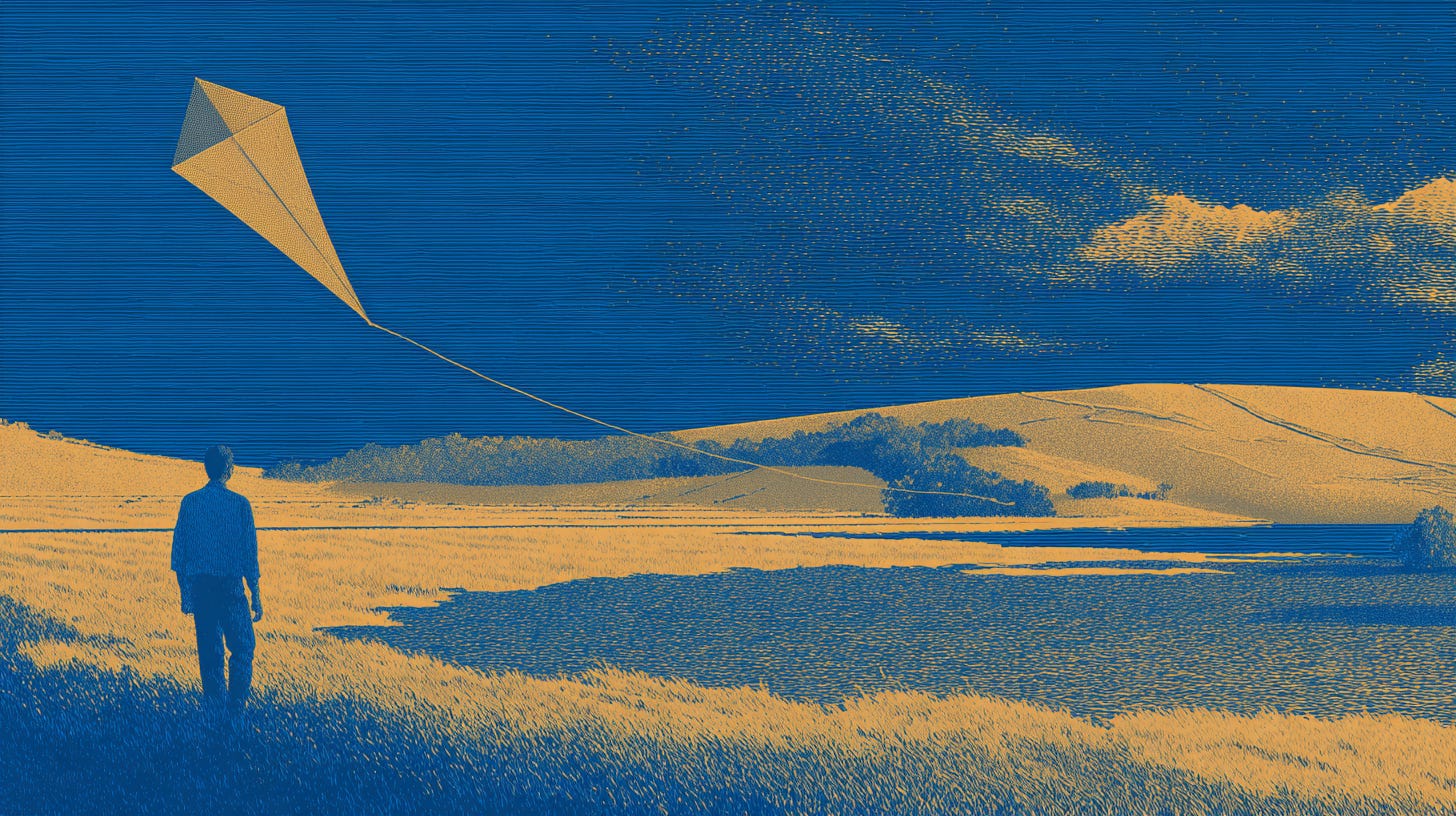
Like a kite fighting against its string. The very thing holding it back is what lets it soar.
I see it in myself sometimes, this allergic reaction to friction.
When learning to code gets tough, my fingers twitch toward Claude before my brain's had a chance to wrestle with the problem.
When a book feels dense, I catch myself reaching for the summary instead of doing the work of deep reading.
We've built a world where technology removes so much necessary friction that we're losing our tolerance for productive struggle. And it's creating something dangerous: the unconditioned mind.
Soft. Fragile. Dependent.
A mind that crumbles the moment the AI fails, the tutorial ends, or the path becomes unclear.
Resistance Signals What Matters
Here's something I've learned the hard way:
That resistance you feel when starting something important? It's not procrastination. It's not laziness. It's not even fear, exactly.
It's your mind's way of saying "Hey, this matters. Pay attention."
Think about it. When was the last time you felt serious resistance about watching Netflix or scrolling Instagram? That kind of empty consumption slides down easy.
True resistance shows up when you're about to do something meaningful. When you're facing an opportunity, not just a task.
I used to try to "push through" resistance. Power past it. But that just made it stronger.
Now? I get curious about it.
When that heavy feeling hits, I ask myself: "What is this resistance trying to tell me? What's actually at stake here?"
Because resistance doesn't need force. It needs focus. It requires immersion.
I've spent the last three years studying the paths of truly exceptional people.
They all chose the hard way.
Not because they're people who enjoy suffering. Not because they couldn't find shortcuts. But because they understood something most of us miss:
The skills that are easiest to learn are exactly the ones AI will automate first.
If you needed all the friction removed to master something, if you relied on templates and shortcuts and "easy buttons", you've actually been training for irrelevance.
I see this playing out in real-time.
The tasks that took me months to learn through struggle? AI still struggles with those. But the ones I picked up quickly through tutorials and templates? Those were the first things I automated.
The more friction you avoided in learning something, the more vulnerable you are to AI displacement.
This isn't just theory.
It's becoming a clear dividing line between those who will thrive and those who will be replaced.
In a world drowning in shallow generalists, the depth that comes from the resistance gauntlet become invaluable.
The person who can solve the problem when the model hallucinates.
The builder who can create when the template breaks.
The thinker who can navigate complexity when the summary fails.
These people aren't just different in degree.
They're different in kind.
They don't just know more.
They know differently.
Choose Resistance, Become Indispensable
So you have a decision to make.
You can optimize for comfort and become increasingly irrelevant.
Or you can optimize for resistance and become increasingly invaluable.
The path of least resistance leads to the land of the replaceable.
The path of strategic resistance leads to the land of the indispensable.
Which path are you on?