



Since 2022, every ambitious person is wrestling with the same idea: stay safe in their job or risk everything starting a startup.
I've been wrestling with this question myself, watching the conversations unfold across X and in countless discussions with friends navigating the same crossroads.
Yet everyone's missing the actual play.
What struck me is that everyone has the same angle, trying to predict trends and time the market. Every conversation, every Twitter thread, every career advice article, they're all asking "What's going to happen next?"
It's the obvious approach.
It's also completely wrong. The people who captured massive value during the internet boom weren't trying to predict the future.
ChatGPT opened the frontier, comparable to the early days of the internet. In the 2000s, every piece of physical infrastructure could be reimagined.
The frontier was wide open. Endless possibilities.
Digital bookstores, surfacing information, and connecting with friends all transformed into empires. Today, five to ten companies (Facebook, Google, Amazon, etc.) control 90 percent plus of the traffic and the money that flows through the internet.1
More value will be created this time.
Which makes the current moment even more confusing. Just as the AI opportunity is clear, getting a job in big tech has never been harder.
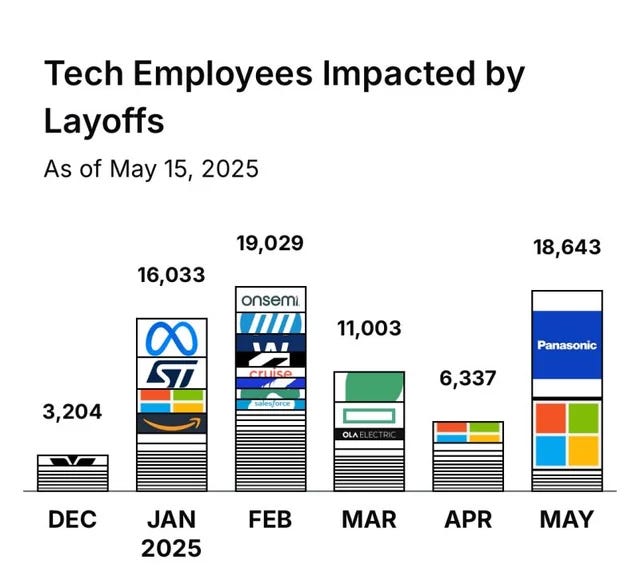
I started digging into the numbers to understand what was really happening.
The layoffs aren't random.
As AI transforms how companies operate, established tech giants are cutting costs while racing to stay competitive. Meanwhile, new categories of companies are emerging to capture the value AI creates.
While sharp people debate “founder mode” vs. traditional careers, they're missing the actual positioning play that creates founder-level returns with lower risk.
Talk to anyone in tech about their career right now. You'll hear the same dilemmas: Should I stay at Meta for the stability, or quit and start something? Join a well-funded AI startup, or build my own? The entire thought process of where you invest your efforts assumes you have to choose between safety and big risks.
But just like in financial markets, there's a third option: strategic positioning.
Then something happened that crystallized everything for me.
When the market crashed in April and I saw the billionaire wealth changes, I finally understood what positioning actually looks like.
After Trump's executive order shaved off $5.8T of value from the S&P 500. The steepest four day loss since the index was created, in the 1950s.2
Most billionaires saw their net worth plummet. Warren Buffett gained $12.7B.
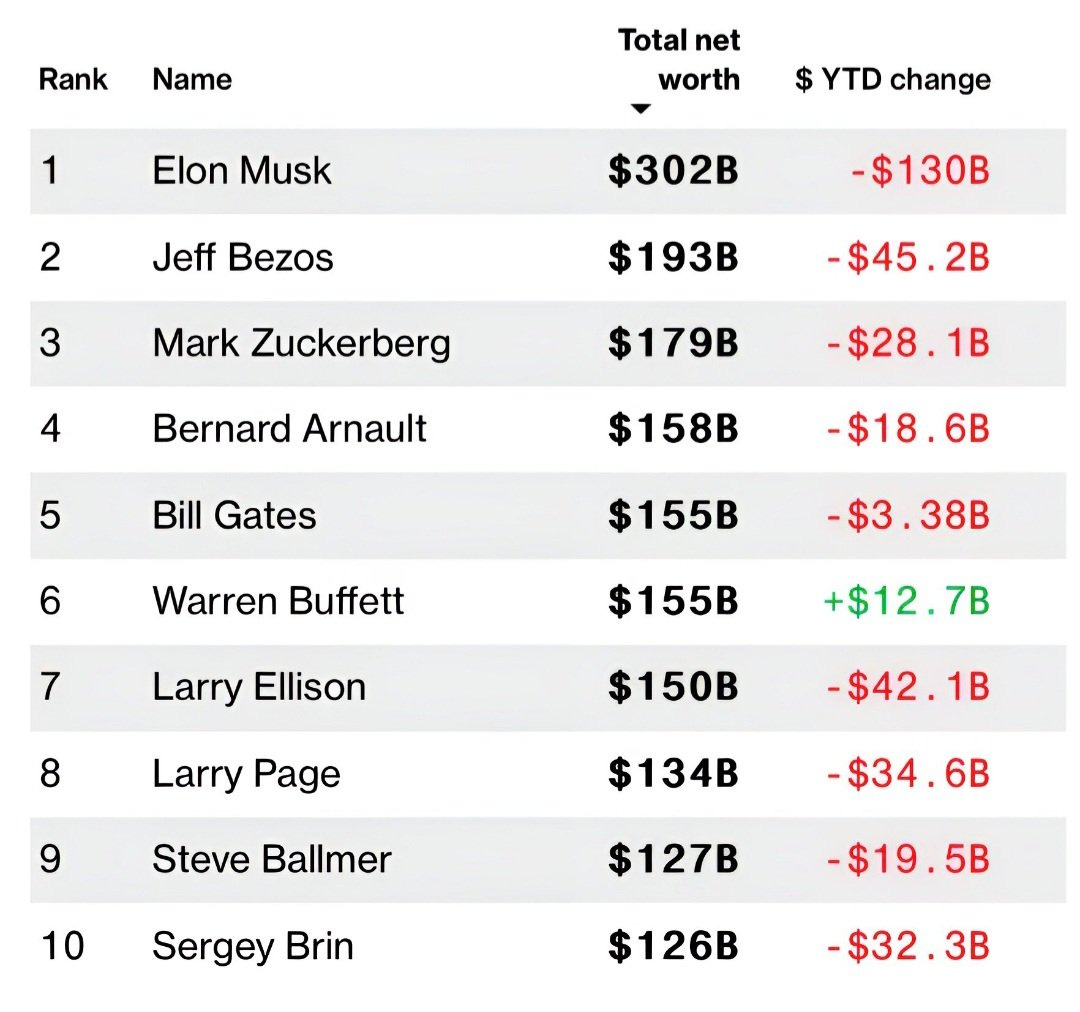
Buffett understands something most investors miss: the right position matters more than predicting market direction.
When you’re well positioned it’s impossible to lose. Market factors are irrelevant when you're positioned to win regardless of direction.
Just before this sell off, it came out that Berkshire Hathaway had a pile of $334B in cash, an all-time high.3 Buffett was selling stocks as the market rose, prompting people to wonder, has Buffett lost his touch?
But this ignores the power of positioning.
As the stock market rose, Buffett made money. When the stock market dropped, Buffett could rebuy those same stocks at a fire sale.
Smart people are watching an equally dramatic shift unfold in AI and somehow missing the same positioning play.
Instead, asking “Should I stay where I am, or quit and start something?”, the question should be “Which companies are about to hit their inflection point, and how do I position myself to be there when they do?”
Read Write Own by Chris Dixon