

Why I Left Product Management to Build More
How the same motion that made me a good PM works better when I'm not calling myself one anymore

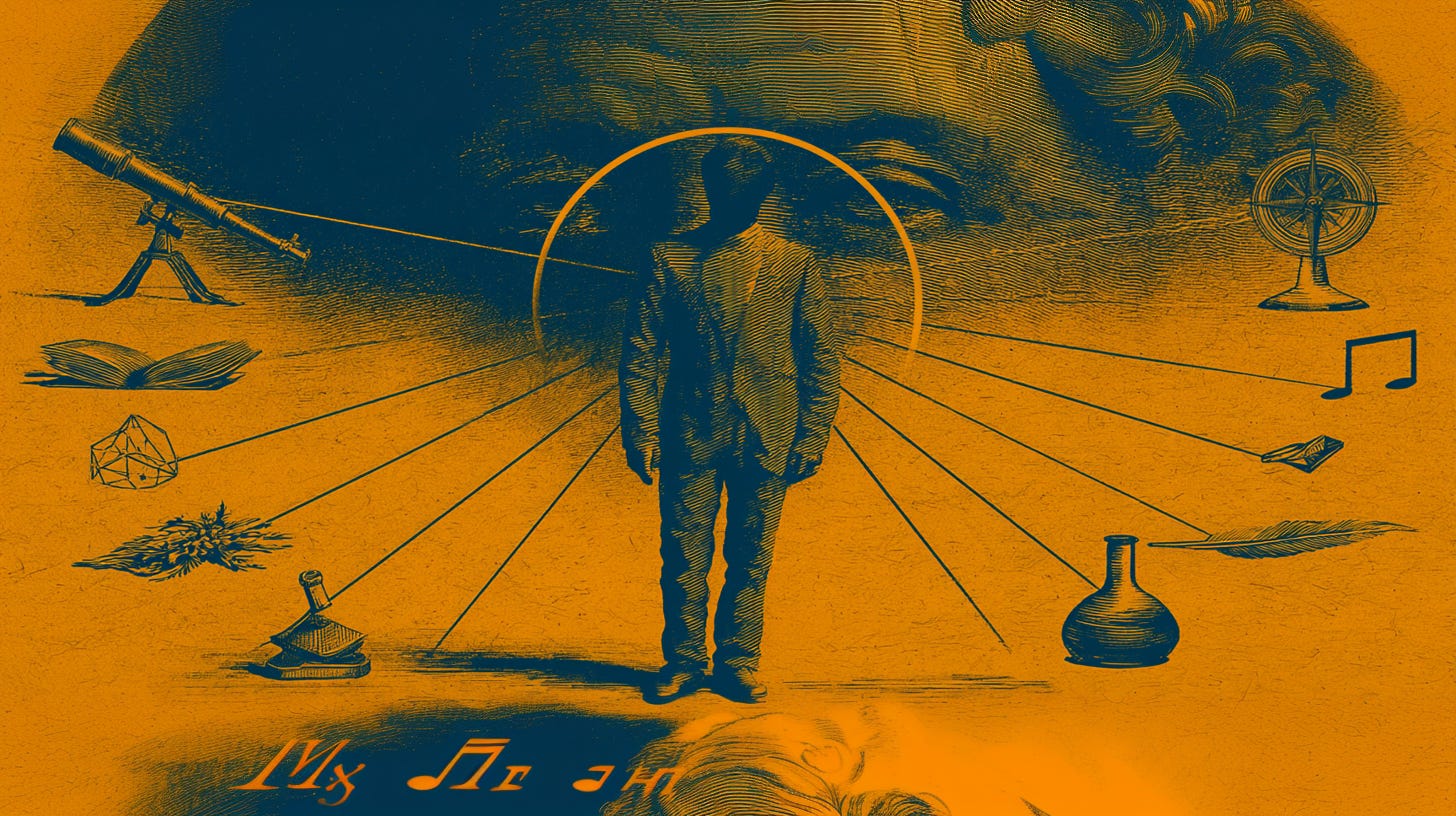
One of my favorite lines from Sam Walton’s autobiography is about versatility and hustle.
Walton opens the book with a chapter titled “Learning to Value a Dollar” where he talks about his father, who got up early and worked long hours. An honest man. His father traded their family farm for another, a watch for a hog, and continuously one job title for another in an accumulation of skills throughout his life.
This was the 1930s.
Walton said, “He was a banker and a farmer and a farm-loan appraiser, and an agent for both insurance and real estate. For a few months, early in the Depression, he was out of work altogether, and eventually he went to work for his brother’s Walton Mortgage Co., which was an agent for Metropolitan Life Insurance.”
This was common.
Specialization didn’t exist yet because the conditions that create specialization didn’t exist. No one could afford to do just one thing. You filled whatever gap you could find and monetized whatever skill you had.
The world changed. Scale arrived. Credentials emerged. Boundaries hardened.
Ask me in 2021, “what does your career look like?”, and I’d describe the exact opposite of everything above. One title. One specialty. Product Manager. For the four years that followed, I built onboarding products used by 3M+ people at Paradox. Depth over breadth. Mastery over versatility.
Then the conditions shifted. November 2022 changed what building means. The raw material is now intelligence rather than software.
When the conditions start to shift, the specialty becomes a liability.
I asked myself the same question again after Paradox was acquired by Workday: “What does your career look like?”
The answer wasn’t straightforward anymore. Product Management was built for a world where software was hard to build. That world was ending.
I sat with that question longer than I expected.
On weekends I was building things I couldn’t touch during the week. Hacking on side projects. Deploying in hours what took me months in my job. The work started to feel more alive outside the title than inside it.
That was the signal.
A good PM takes people from their current state to their desired state. The gap between those two points is where all the value of product vision, taste, and execution lives. The job is bridging the product and market.
AI Deployment is the exact same motion. Just different raw materials.
Holding ambiguity. Translating between what people need and what technology can do. Moving someone from stuck to unstuck. Any PM who’s shipped a product has been doing this for years without calling it that.
People ask if I miss building. The definition of building changed. I build more now than I ever did inside a sprint cycle. No technical debt. No legacy codebase. No waiting two quarters to learn if the idea was right.
I’m not shipping features anymore. I’m standing up systems, automating workflows, and helping teams figure out how to build with AI in the first place. The output is capability.
You don’t stop being a craftsman. The canvas just gets bigger.
The credentials for a role like this don’t exist yet. The gap is real.
Walton’s father would recognize this moment. He didn’t wait for the right title to appear. He found the next gap and filled it.
The gaps forming now don’t all have names yet. But they have a shape.
And versatility is swinging back.