



You're smart as hell, but can't take your own advice.
Ever notice how you can solve everyone else's problems but your own?
It's like having a superpower that doesn't work on yourself.
You're that friend who gives killer advice. The one who sees through the BS and offers clarity that feels almost magical.
But when it comes to your life?
Total paralysis.
I've been thinking about this lately. I’ve provided my input on a handful of my friend’s product launches. I build and launch enterprise software every month. But launching a paid subscription to newsletter caused me to tap the brakes, and ask everyone else for advice
Why are we so good at solving other people's problems but so bad at solving our own?
This is the "Just-In-Case Learning Trap."
Most smart people approach learning like they're prepping for some imaginary final exam.
We consume articles, podcasts, books, and courses with this vague sense that it'll be useful... someday.
This creates "intellectual obesity."
You're carrying around massive amounts of mental weight that you can't actually use. You know a little about everything but can't apply any of it with precision to your own situation.
Charlie Munger would say, there's a difference between "Planck knowledge" and "chauffeur knowledge."
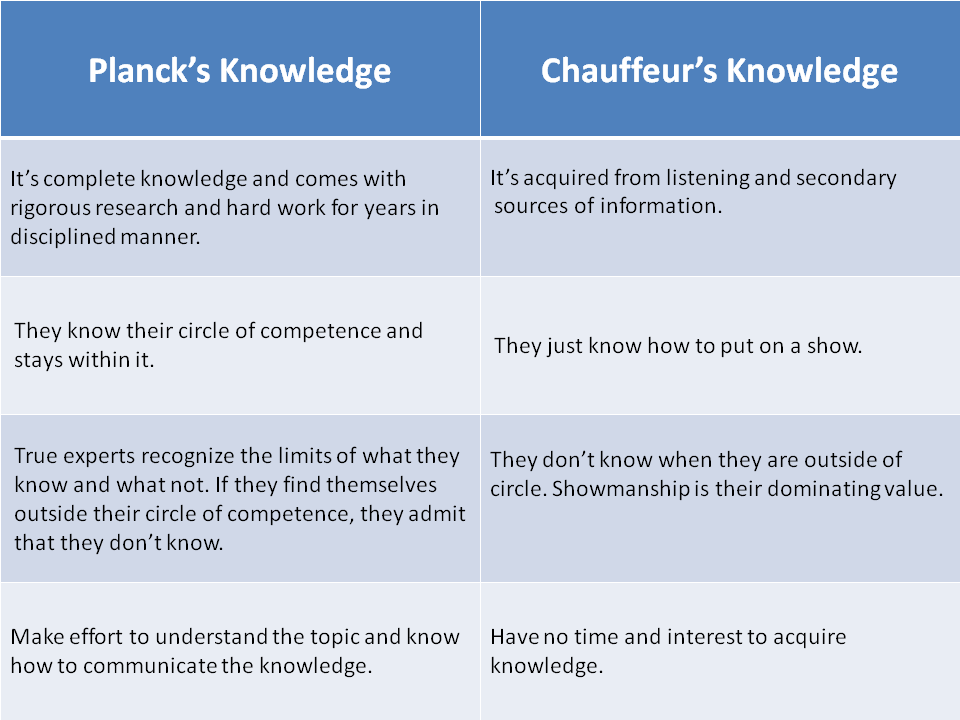
Planck knowledge = deep understanding
Chauffeur knowledge = sounding smart without any understanding
Most of us are operating with chauffeur knowledge. We can talk about concepts, but we haven't paid the dues to truly understand them.
Quick test: Do you have 37 unread articles in your Instapaper queue? Have you started 5 online courses but finished none? Do you research topics that have ZERO connection to any problem you're actually trying to solve?
If you're nodding, welcome to the club. The trap is seductive because learning feels productive.
But here's the thing about external vs. internal clarity:
When someone describes their problem to you, it becomes a case study. You can see it objectively, pattern-match against all that just-in-case knowledge, and offer solutions because this was the moment you’d been preparing for.
But when you look at your life?
You're not analyzing a case study. You're swimming in it.
Every path forward comes loaded with personal risk. That knowledge is the source of paralysis.
As Balaji says, your vision acts as a "mental clothesline where you hang ideas among each other."
But when you lack a clear vision for your own direction, you have no clothesline. Information just piles up in heaps. You start overthinking instead of pattern-matching.
Here's what's really at stake: while you're busy learning everything, other people are busy becoming someone.
They're developing deep expertise.
They're building reputations.
They're solving real problems.
You?
You're impressing people at dinner parties with scattered insights while remaining perpetually one step away from breakthrough.
So how do we fix this?
The shift from information collector to insight generator isn't about learning less. It's about learning with intention.
Here's the process that changed consumption for me:
1. Audit what people already seek you for
Look at your last month of conversations. What do people ask your opinion on? What problems do they bring to you? This reveals your natural genius zone.
2. Identify your ideal identity
What's the version of yourself you're moving toward? Not some fantasy, but the logical evolution of who you already are. This becomes your mental clothesline.
3. Create an intention filter
Before consuming any new information, ask: "Does this help me bridge the gap between who I am now and who I'm becoming?" When you don’t know, ask AI to summarize it then decide. If the piece doesn’t help you become more, don't consume it.
When I flipped from random consumption to strategic learning, several things happened immediately:
• I started retaining more because everything connected to a central purpose
• I started applying insights faster because I was learning with immediate application in mind
• I started developing expertise instead of just familiarity
Most importantly, I started making decisions from clarity instead of confusion.
The people who consistently generate insights aren't smarter than information collectors. They're more intentional.
You already have more clarity than you think.
It's hidden in what people ask you for help with. It's visible in the problems you solve for others.
The best way to learn is to teach. But I'd add, the best way to learn is to apply.
Stop learning just in case.
Start learning just in time.
Stop collecting information.
Start generating insight.
Your future self will thank you.